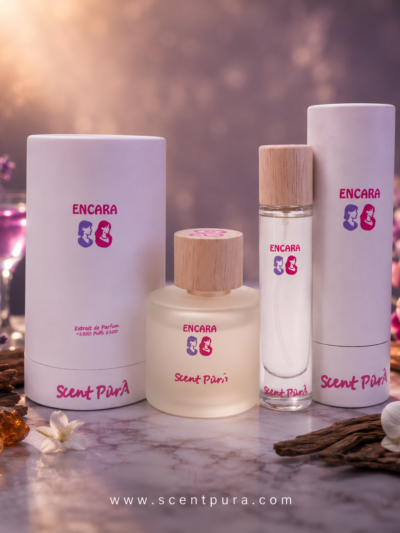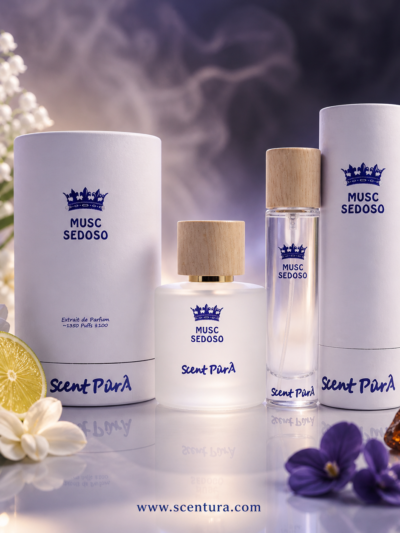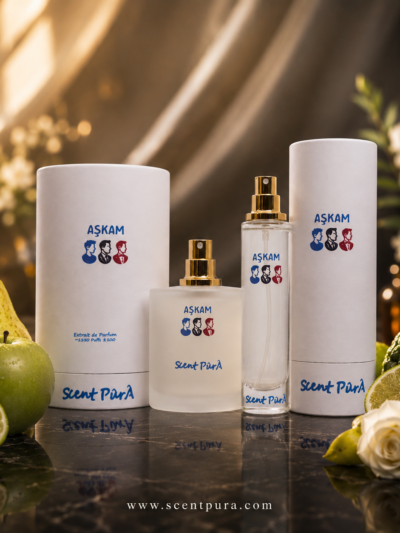
aşkam
Fresh fruity floral fragrance with bergamot, pear, and green apple, blended with jasmine, rose
100 ml
40 ml
fromRs 2,199Rs 2,700
Choose size 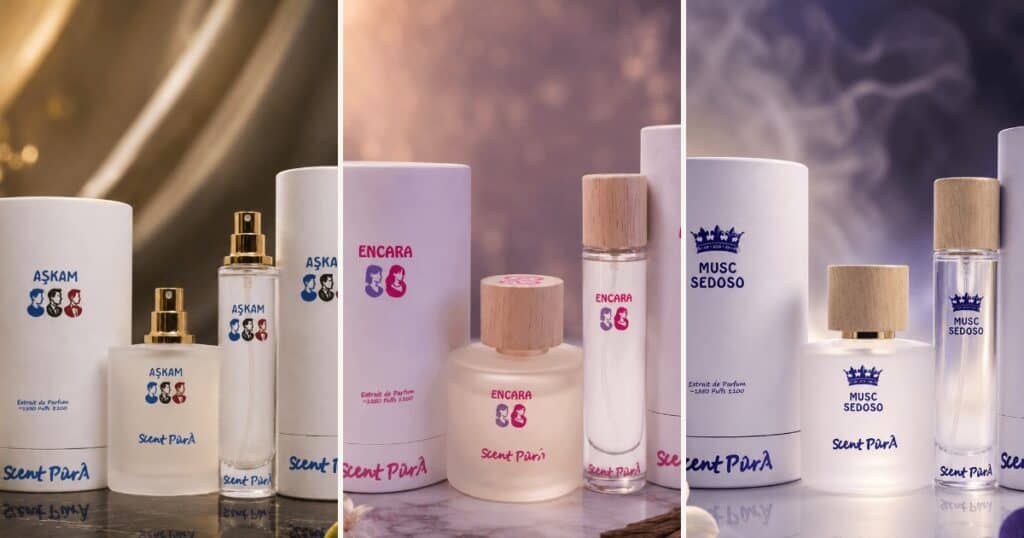
Search Google for perfume problems and the same seven complaints come up over and over. We know because we looked: these are the actual phrases people type, in this order of popularity.
Every one of them has a real, physical cause. Most are not a fault in the bottle, and a few are things nobody selling perfume wants to explain to you. So here they are, diagnosed one by one.
This is the most searched perfume complaint there is, and the answer is almost always the same: concentration.
Perfume is oil suspended in alcohol, and the ratio is the whole ballgame. An eau de toilette is roughly 5–15% perfume oil. An eau de parfum is roughly 15–20%. An extrait de parfum is 20–40%. The alcohol is a delivery system — it evaporates and carries the scent up with it. The more of your bottle is alcohol, the sooner it is gone.
In Pakistan that matters more than almost anywhere, because heat accelerates evaporation. A fragrance that lasts six hours in a London winter can be finished by lunch in a Lahore June.
Three things to check before you blame yourself:
We blend everything at 35–40%, which is the top of that band. That is the one claim here we are asking you to take on trust rather than check yourself — and it is why we ship a tester with every bottle, so you can test the claim before you commit to it.
Two different causes, and they need different answers.
If it smells of alcohol for the first thirty seconds and then settles: that is normal and nothing is wrong. You are smelling the carrier before it evaporates. Spray, then leave it alone for a minute before judging anything.
If it still smells sharp after five minutes: that is a formula with a lot of alcohol and not much oil. The sharpness is what is left when there is not enough material underneath to take over. A higher concentration does not have this problem, because there is less alcohol in the bottle to begin with.
A related habit worth dropping: do not sniff your wrist immediately and conclude anything. The first impression of any fragrance is the least representative part of it.
This one is genuinely reassuring once you know it.
Your nose adapts to a constant smell within minutes — it stops reporting it so it can notice new things instead. It is the same reason you cannot smell your own home. The fragrance is still there and other people can still smell it; your brain has simply filed it as background.
The wrong response is to spray more, which is how people end up wearing far too much without knowing. Two to three sprays of an extrait is enough. If you want to check whether it is still working, smell a scarf or a sleeve rather than your skin — fabric holds scent and your nose has not adapted to it in the same way.
Skin chemistry, and the differences are larger than most brands admit.
Body temperature changes how fast materials evaporate. Skin oil gives them something to cling to. Skin pH can shift how certain notes read — a rose that is clean and powdery on one person can turn sharp and metallic on another. Diet and medication play a smaller part.
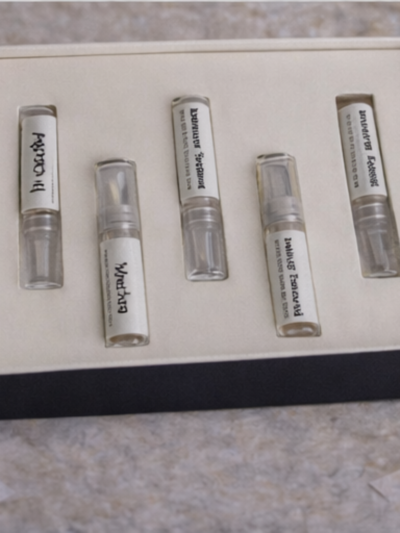
The practical consequence: a fragrance recommendation is a starting point, not a promise. This is the entire reason a tester matters more than a review, including ours. A tester box is five fragrances for Rs. 1,500, which is a cheaper way to find out than a bottle you do not wear.
Usually alcohol meeting skin that is not intact. Three common situations:
If it burns every time, on undamaged skin, you may be reacting to a specific material rather than to alcohol. Stop using it — that is your body telling you something, not a problem to push through.
Perfume oils are oils, and some juices carry colour. On most cotton it is invisible. On silk and on anything pale it can leave a ring, and on a white kameez a darker fragrance occasionally leaves a faint yellow mark that washing does not fully lift.
The fix is placement rather than avoidance, because fabric actually holds fragrance far longer than skin does:
Alcohol vapour is a nasal irritant, and you get the biggest dose of it in the first seconds after spraying, at close range. Aldehydes — the bright, slightly soapy materials in many classic openings — do the same to some people.
Practical steps: spray at arm’s length rather than under your chin, spray before you get dressed rather than after, and do not spray in a small unventilated bathroom. If a specific fragrance reliably does it and others do not, it is that composition, not you.
It changes rather than spoils. Stored properly — cool, dark, in its box — three to five years is ordinary and many bottles go considerably longer. Stored badly, you can notice the top notes going sour inside a year.
“Stored badly” in a Pakistani home almost always means one of three places: a bathroom shelf, a sunny windowsill, or a car. Heat and light break the molecules down, so a badly stored bottle is not just weaker, it is a flatter, sourer version of the original before it ever reaches your skin.
A cupboard or drawer, away from the window, in the box it came in. That is the entire method and it will add years.
Five of the seven complaints above are not faults in the perfume. They are how noses, skin and alcohol actually behave, and knowing that saves you replacing a bottle that was never the problem.
The two that are about the bottle — it does not last, and it smells of alcohol too long — both come back to concentration. That is the one thing you cannot fix with technique, and the one thing worth checking on the box before you buy.
If you want the routine side of this, we wrote up how to apply perfume so it lasts in Pakistan’s heat. If you want to know what you should be paying, we set out what perfume actually costs in Pakistan, measured per millilitre rather than per bottle. And if you want to know which of ours last, that list is here.
Everything we make is extrait de parfum at 35–40%, and every bottle ships with a matching tester — because the only honest test of longevity is a week of your own weather.
Two to three for an extrait. If people comment from across a room, it is more than two to three. If you are used to an eau de toilette, this will feel like too little for about a week.
For an extrait, a full working day is a reasonable expectation, and considerably longer on fabric — a collar or dupatta will often still carry it the next morning. For an eau de toilette in Pakistani summer, three hours is normal.
No, the opposite. Friction generates heat and pressure ruptures the top notes, so you speed up exactly the process you are trying to slow. Spray and leave it.
Clothes hold it longer; skin lets it develop and change. Do both — pulse points for the arc of the fragrance, an inner collar or hem for staying power.
A cool dark cupboard is enough and carries none of the risks. Repeated cold-to-warm cycling is its own stress, and most kitchen fridges smell of food.
Yes, with cash on delivery anywhere in the country. Orders are packed within 1–2 working days and delivery usually takes 2–5 after that, with a tracking number by SMS and email.
Extrait de parfum, blended in Pakistan. A tester in every box.
Fresh fruity floral fragrance with bergamot, pear, and green apple, blended with jasmine, rose
Elegant floral woody — lavender, bergamot, mandarin, rosewood
Soft floral musk perfume with notes of violet, jasmine, and vanilla
Discover our premium perfume collection: Fatal Charm, La Caché, Imortal Amor, Vackra